← Back to Blog
Everything About the Prix de Lausanne (Selection Process, Prizes, and How It Differs from Other Competitions)
tudy.clubBballet
Everything About the Prix de Lausanne (Selection Process, Prizes, and How It Differs from Other Competitions)
A comprehensive look at the Prix de Lausanne ballet competition -- from its unique week-long residency format and school selection system to its comparison with YAGP and notable Korean winners.
•6 min read
#Ballet#Prix de Lausanne
Everything About the Prix de Lausanne (Selection Process, Prizes, and How It Differs from Other Competitions)
The news about ballerina Dayeon Yeom placing 2nd at the Prix de Lausanne has been flooding my feed. Maybe because I've been taking ballet classes lately... it's showing up on my Instagram more than the Olympics lol.
But I didn't actually know much about what kind of competition it was or how prestigious it is. There wasn't even a proper article on Namuwiki (Korean Wikipedia), so I asked Claude all sorts of questions. The more I learned, the more unique this competition turned out to be.
So here's a Prix de Lausanne wiki, co-written with Claude since Namuwiki didn't have one.
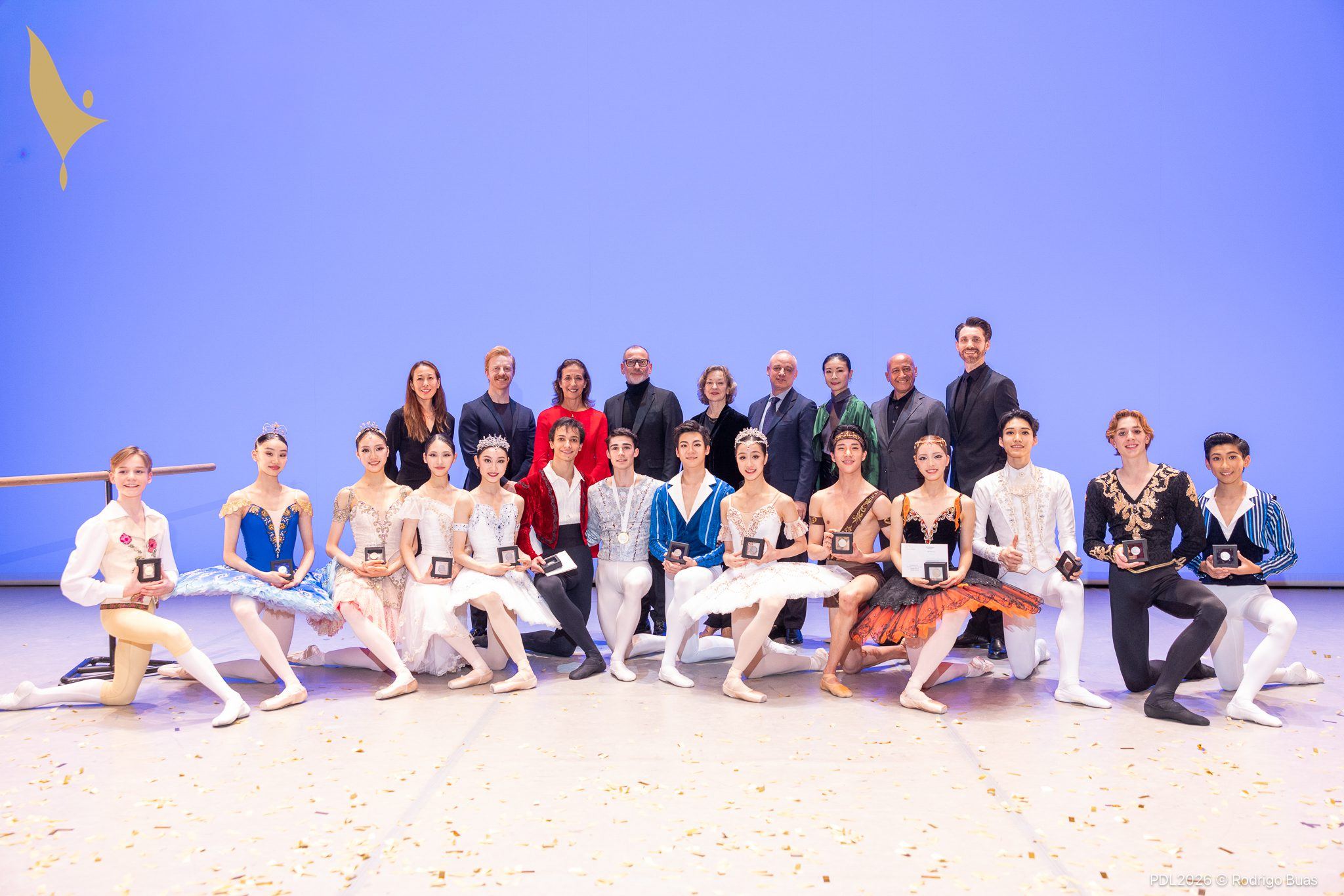
(Photo of this year's winners)
What Kind of Competition Is It?
The Prix de Lausanne is an international ballet competition held every January-February at the Théâtre de Beaulieu in Lausanne, Switzerland. Founded in 1973, this year marked its 54th edition. Only students aged 15-18 who aren't yet professional can participate. Among the world's five major ballet competitions (Varna, Jackson, Moscow, Paris, and Lausanne), it's the only one exclusively for young dancers.
I was curious about the specific age requirements, so I asked -- turns out they're divided into Group A (roughly 14-16) and Group B (17-18) for judging. They started separate judging in 2018, with variations assigned differently by age group. However, the final awards aren't fully separated by category -- they come from one pool.
From 450 to 14
The selection process is pretty rigorous.
- Around 450 candidates worldwide submit 15-20 minute videos featuring barre and center work.
- 80 are selected from these + preselection, YAGP winner privileges
- The 80 travel to Lausanne, Switzerland for a week-long residency with daily classes (part of the judging)
- Selection round (classical variation, contemporary piece)
- Finals, scholarships awarded
First, about 450 candidates worldwide send in 15-20 minute videos. These feature barre and center work, and a panel of 9 expert judges narrows them down to about 80. This year, 444 applicants from 43 countries were whittled down to 79. There are also candidates pre-selected through European/international or Latin American preselections, and YAGP winners get a special pass to skip the video round and go straight to the semi-finals.
Once these 80 arrive in Lausanne, Switzerland -- this is where it fundamentally differs from other competitions. They spend a week in residency taking daily classes. World-class ballet instructors provide lessons and coaching, and all of this factors into the judging. They don't just evaluate stage performance -- class attitude, receptiveness to instruction, and interaction with other participants are all observed throughout the entire week. Park Hanna, the youngest medalist in 2018, said: "The atmosphere is different from other competitions. Beyond evaluating performances, you live together for a week learning fundamentals, and your attitude during that time is reflected in the judging."
On Friday, the selection round begins -- all 80 candidates perform a classical variation and a contemporary piece on the Beaulieu Theatre stage in front of an audience. The week-long observation scores are combined with the stage scores to determine roughly 21 finalists.
Saturday afternoon, the finals. Out of 21, 14 receive scholarships. A funnel that starts at 450 and narrows to 14.
Rankings Mean School Choice
This was the most fascinating part for me as I learned about this competition. You get to choose your school!
Lausanne's list of partner schools and companies includes world-class institutions like the Paris Opera Ballet School, the Royal Ballet School in London, Stuttgart's John Cranko School, and New York's SAB. Each institution has a set number of scholarship spots, and winners choose their preferred school in order of ranking. First place picks first, then second place, and so on.
In other words, ranking isn't just about prestige -- it's career trajectory priority. You're not hanging a medal on your wall; you're deciding where you'll train tomorrow. Park Hanna, who placed 2nd in 2018, went to the Royal Ballet School in London. Park Sae-eun, the 2007 winner, eventually rose to become an étoile (the highest rank) at the Paris Opera Ballet.
Winners also receive about 20,000 Swiss francs (roughly $22,000 USD) in living expenses. All finalists receive a consolation stipend of 1,000 Swiss francs, and even non-winners sometimes get contacted separately by school and company directors who spotted them.
So How Does It Differ from YAGP?
I remembered seeing a video of ballerino Mincheol Jeon dancing in front of a blue wall and initially thought it was Lausanne. Turns out it was actually the YAGP (Youth America Grand Prix) stage. Both competitions are known for their blue backdrops, but they're quite different in nature.
I asked Claude to compare them, and here's what came back.
YAGP, started in 1999 in the United States, is the world's largest student ballet competition. Over 12,000 participants enter each year, going through regional semi-finals in cities worldwide before the finals in New York. The age range is broader too, 9-19. Stage performance is the core of judging, and ballet school directors on the jury can independently offer scholarships to students who catch their eye, separate from the official scores.
Lausanne, on the other hand, is an elite, small-scale competition where about 450 apply and only 80 make it to the site. Only ages 15-18 can participate, and the week-long residency classes and attitude factor into judging. For contemporary pieces, YAGP lets you bring a solo choreographed specifically for you, while Lausanne requires you to choose from a designated repertoire list.
To put it simply, if YAGP is a "broad marketplace of opportunity," Lausanne is a "deep elite gateway." Mincheol Jeon took the YAGP route all the way to the Mariinsky Ballet, while Park Sae-eun took the Lausanne route to the top of the Paris Opera. There's more than one path to the summit.
For reference, ballerino Mincheol Jeon has no Prix de Lausanne record. He grew through a different route during the Lausanne-eligible age range -- a special case where he joined the Mariinsky Ballet directly as a soloist on the recommendation of senior dancer Ki-min Kim.
What's interesting is that the two competitions are actually partners. There's an exchange program where finalists who didn't receive a scholarship from one competition can enter the other without going through preliminaries.
Why Is Lausanne Particularly Famous?
I was also curious why Lausanne stands out when there are five major ballet competitions.
-
Full YouTube livestream
The entire process from preliminaries to finals is livestreamed on YouTube and ARTE TV. Since the daily classes, coaching sessions, and everything are all public, you emotionally invest not just in results but in the growth stories of young dancers. It's basically the ballet version of Produce 101...
This year's process is available as YouTube videos too.
-
Unmatched positioning as a youth-only competition
Other top-five competitions allow professionals, but Lausanne is strictly students only. That creates an excitement of "could this kid be the next Park Sae-eun?"
-
Direct career connection
It's not just prize money -- winners get direct access to the world's top schools.
-
Korea's dominant track record
From Kang Sue-jin to Park Sae-eun, Park Yoon-jae, and Yeom Da-yeon, Koreans have consistently performed well. Korean media naturally covers it a lot, making it especially well-known in Korea.
Notable Korean Winners
I asked Claude to map out the lineage of Korean winners. Note that before 1985, scholarships were awarded without rank distinctions, so early records should be interpreted with that in mind.
- 1985 -- Kang Sue-jin: First Korean scholarship recipient. Later became principal dancer at Stuttgart Ballet, now artistic director of the Korean National Ballet.
- 2002 -- Choi Yu-hee: Winner. Later joined the Royal Ballet.
- 2005 -- Kim Yu-jin: 1st place. Later joined the Czech National Ballet.
- 2007 -- Park Sae-eun: Winner. Later became étoile at the Paris Opera Ballet (first Korean to do so).
- 2018 -- Park Hanna: Youngest ever (age 15) 2nd place. Later went to the Royal Ballet School.
- 2025 -- Park Yoon-jae: First Korean male dancer to win 1st place.
- 2026 -- Yeom Da-yeon: 2nd place + Audience Award. All 6 Korean finalists received awards.
Here's a video of ballerina Yeom Da-yeon's performance.
Wrapping Up
Lausanne's official philosophy is that they evaluate "potential over results." They're not looking for the person who dances the best right now -- they're searching for the one who will grow the most. That's why they observe a week of classes, watch how candidates receive instruction, and see how they respond to the unfamiliar territory of contemporary dance.
In an interview, Yeom Da-yeon said: "I want to become a dancer whose every movement -- down to the fingertips and toes -- carries emotion and life that reaches the audience." That's a statement from a 17-year-old who chose homeschooling over arts high school and quietly built her skills at the ballet academy her father runs.
I think what Lausanne chose wasn't her current level of completion, but that potential.
Written by
J
Sejin Jung
PM & builder. Director of Sapienta.